

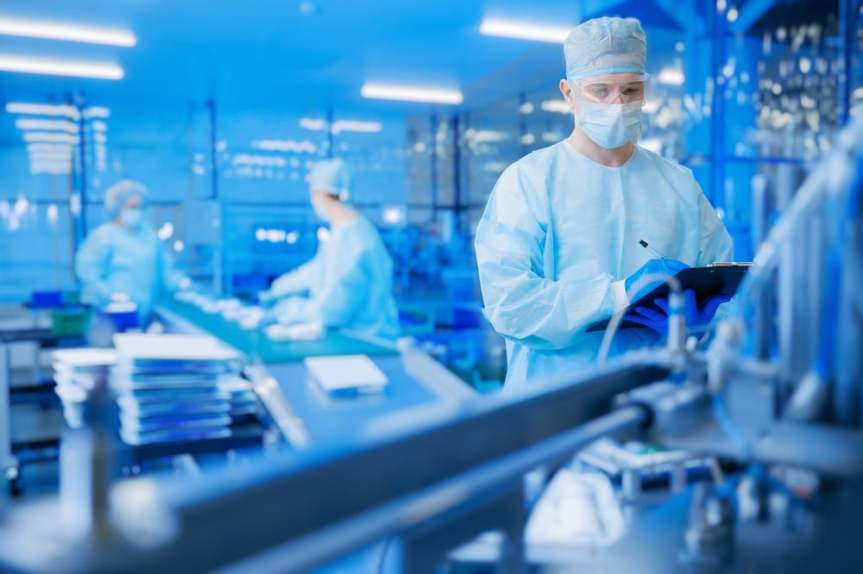
What Cleanroom Assembly Means for Medical Devices
Medical device cleanroom assembly is the process of combining manufactured components into finished devices within a controlled environment designed to limit airborne contamination below levels that could compromise device function, sterility, or patient safety. Standard production environments contain millions of airborne particles per cubic metre, including dust, skin cells, and microbial matter that could introduce contamination into sensitive assemblies. Cleanrooms use high-efficiency air filtration, controlled airflow patterns, and strict personnel and material protocols to reduce this contamination to levels defined by international classification standards.
Cleanroom Classification Standards
Medical device cleanroom assembly facilities are classified according to ISO 14644-1, which defines maximum permissible particle counts at specified sizes. ISO Class 7, the most commonly used classification for medical device assembly, allows no more than 352,000 particles per cubic metre at 0.5 microns and 2,930 particles at 5 microns. ISO Class 5, applied for higher-risk operations, reduces these limits to 3,520 particles at 0.5 microns. White rooms, sometimes used for lower-risk sub-assembly operations, provide controlled conditions above ISO Class 8.
Selecting the correct classification for each operation requires analysis of the device type, the clinical risk of contamination, and the regulatory requirements that apply to the specific device category.
Why Sterile Medical Devices Demand Cleanroom Production
Sterile medical device assembly requires that the assembled device, before terminal sterilisation, contain a bioburden low enough for the sterilisation process to reduce microbial contamination to acceptable levels. If assembly takes place in an environment with uncontrolled particulate and microbial contamination, the bioburden on the device before sterilisation may exceed the validated load that the sterilisation process was designed to handle. The result is a device that appears sterile by the specified sterility assurance level but carries a residual contamination risk that the validation does not cover.
For implantable devices and devices used in surgical procedures, where any contamination has direct patient consequence, this risk is not acceptable.
Material transfer into the cleanroom follows defined protocols that include wiping down packaging, transferring components through airlocks, and quarantining incoming materials until their contamination status has been verified. These procedures are documented and monitored to ensure consistent compliance.
The Assembly Operations Performed in Cleanrooms
Cleanroom medical device manufacturing covers a range of assembly operations depending on the device type:
- Sub-assembly of structural components, fixings, and mechanical interfaces
- Integration of electronic modules, sensors, and power sources into device bodies
- Application of adhesives, coatings, and surface treatments under contamination control
- Functional testing of assembled devices before final packaging
- Primary packaging of devices in materials suitable for the intended sterilisation method
Each operation requires documented work instructions, trained personnel, and inspection steps that generate the device history records required for regulatory compliance.
Regulatory Requirements for Cleanroom Assembly
Medical devices assembled for sale in regulated markets must be produced under quality management systems certified to ISO 13485, the international standard for medical device quality management. Medical device cleanroom assembly within an ISO 13485 framework requires documented environmental monitoring programmes, personnel qualification records, process validation for each assembly operation, and corrective action systems for out-of-specification results. Regulatory bodies including the FDA, EMA, and Singapore’s Health Sciences Authority review this documentation during facility inspections and device registration assessments.
The quality management system and the cleanroom infrastructure are not separate concerns; they are integrated parts of the compliance framework that medical device production requires.
Choosing a Cleanroom Assembly Partner
Evaluating a cleanroom assembly partner for medical device production involves reviewing the facility classification and environmental monitoring data, the quality management system certification, the range of assembly operations available, and the supplier’s experience with comparable device types. Medical device cleanroom assembly partners that maintain classified facilities, documented procedures, and ISO 13485 certification provide the compliance infrastructure that regulated markets demand.
Medical device cleanroom assembly performed in a validated, certified environment delivers the production quality and regulatory documentation that patient safety and market access require.

